This On Call International article will discuss the following:
-
- The challenges travelers face during large-scale natural disasters and humanitarian crises, highlighting how catastrophic events such as major earthquakes can severely disrupt access to medical care, transportation, communications, shelter, food, and other essential resources, creating urgent safety and security concerns for affected travelers.
- How travel risk management and emergency assistance teams coordinate complex crisis response operations in disaster-affected regions, demonstrating the importance of medical expertise, local networks, security assessments, evacuation planning, transportation coordination, and real-time problem-solving when traditional emergency resources are overwhelmed or unavailable.
- A real-world example of traveler extraction and emergency support following the 2023 Turkey earthquakes, illustrating how On Call International’s medical, operational, and security teams collaborated to locate travelers, identify appropriate medical care, coordinate transportation under difficult conditions, secure safe accommodations, and facilitate their eventual departure from the disaster zone and return home.
 Background
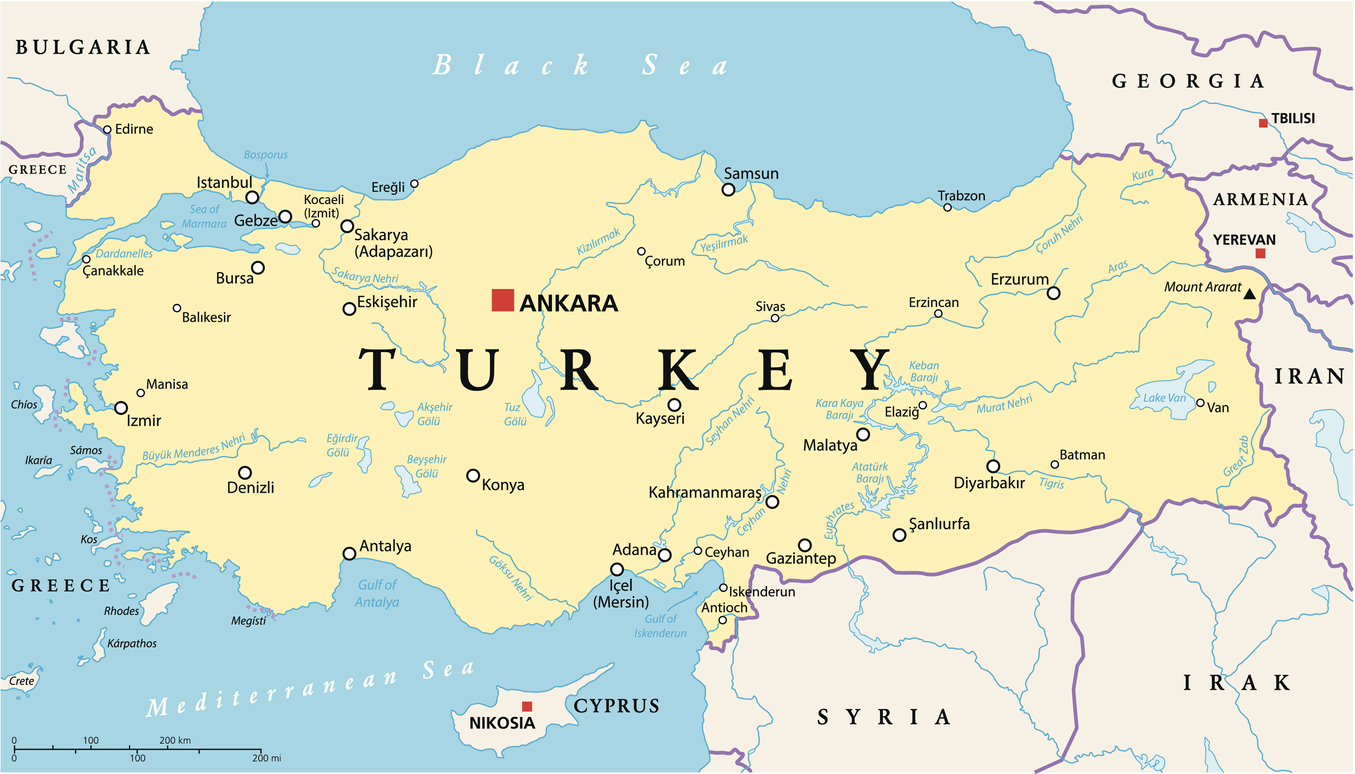
In the early morning hours of February 6, 2023, a 7.8 earthquake struck south-central Turkey in Gaziantep Province. One of the strongest to hit the area in more than a century, the earthquake caused severe damage in South-Eastern Turkey and North-Western Syria and was felt as far as away as Lebanon and Egypt. Multiple aftershocks followed, including a 7.7 magnitude earthquake that struck at 1:24 pm local time just north of the initial epicenter in Turkey’s Kahramanmaras province. Thousands of buildings collapsed during the earthquakes, tens of thousands died, and millions of people were displaced in Southern Turkey and Northern Syria.
On Call Steps In
Two days after the earthquakes struck, On Call International’s Global Response Center received a request for assistance from a group of travelers in Hatay, Turkey. The eldest of the travelers suffered from a broken arm when their home collapsed, and the group was forced to take shelter outside for over forty-eight hours with minimal food, water, shelter, and sanitation. Government aid response had still not arrived in Hatay and access to food, clean water, medical care, and cell service was extremely limited.
On Call International’s Security Team immediately took action and identified options for the travelers to be extracted out of Hatay to receive medical care and adequate shelter. The ideal solution was to coordinate a local private ambulance, a standard procedure for normal medical evacuation cases; but due to the disaster, ambulances were under direct control to assist in the government response.
Challenges and Solutions
On Call’s Global Security Team worked behind the scenes to pursue its own local contacts to determine if a traditional car and driver was available to make the transport despite the challenging circumstances. Demand for such services was exceptionally high, but an option was found.
Before the transport could take place, however, the priority was to identify the closest healthcare facility that could treat the traveler with the broken arm. While not all regions of Turkey suffered as immensely as Hatay, given the magnitude of the disaster, access to medical care and housing was stretched thin across the entire region. On Call’s Medical Team leveraged their local networks and operational experience to identify a hospital in Adana, Turkey where they were familiar with the facilities and staff and already had a guarantee of payment pre-established.
From there, On Call’s Global Security Team determined how to get the injured traveler and the rest of the group to the healthcare facility amid the disaster. The group had fled their building when the initial earthquake struck, and with the amount of damage in the area, the travelers were unable to pinpoint their whereabouts. To make matters more complex, only one phone was still charged amongst the group of travelers, and the battery was low with no way to recharge.
Final Extraction Out of Turkey
On Call’s Global Security Team identified an easily identifiable rally point: a lone clock tower still standing in the city center. It was confirmed both the travelers and driver were able to meet at this designated rally point so they could be transported to the medical facility. Once the travelers received medical care, they were transported to a nearby safe haven in which On Call had arranged for their overnight stay. Two days later, after the group had a chance to recuperate and rest up for onward travel, the travelers departed the country via commercial flight. On Call monitored the travelers’ journey until it was confirmed they had touched back down in their home countries safe and sound.
About On Call International:
When traveling, every problem is unique–a medical crisis, a political threat, even a common accident such as a missed flight. But every solution starts with customized care that ensures travelers are safe and protected. That’s why for over 25 years, On Call International has provided fully-customized travel risk management and emergency assistance services protecting millions of travelers, their families, and their organizations. Visit www.oncallinternational.com and follow us on LinkedIn to learn more.